
Home / Devlog / Section Command
The valley at real size
A qalat is thirty to fifty metres across, and my compounds were twelve. Rebuilding the valley's hamlets at their real size meant tripling every range in the fight.
Yesterday the game got its main map: a valley of my own making off the Helmand River, with three hamlets, a bazaar, a canal, a wadi, a hill for the base, and the river along the bottom. Today I took most of it apart and built it again, because it was the wrong size.
First I spread it out, twice the distance each way, so the hamlets stand apart with fields between them. Then I looked at the compounds.
Twelve metres or fifty
The compounds were eight to twelve tiles across: about twelve metres by nine, one house with a wall round it. A real qalat, the walled family compound you find all over Helmand, is thirty to fifty metres across. Inside the wall there's a range of rooms along the back, some flat-roofed and some domed, a guest room by the gate, often a corner tower, a shed and a pen for the animals, a well, a kitchen garden, hay and firewood.
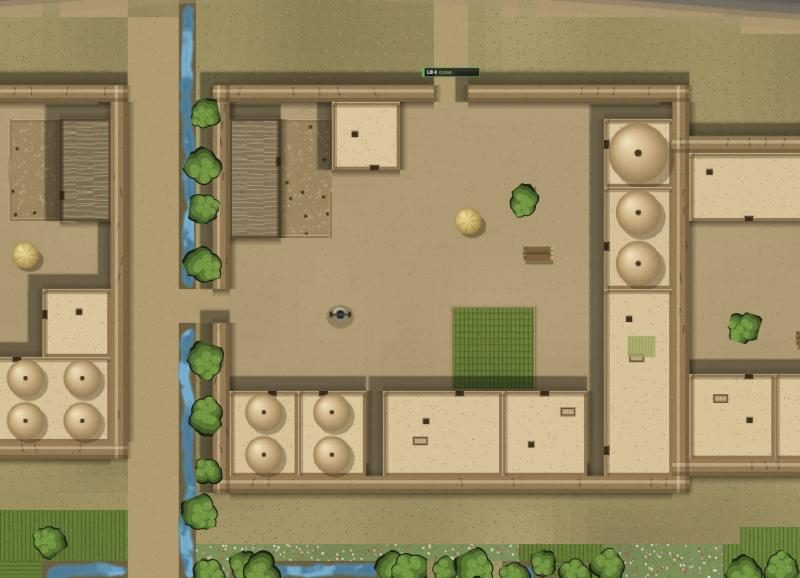
So I rebuilt them. Each qalat is now laid out from a plan the way they're built, and drawn building by building: its roof and parapet, its door, its domes, the crenels on its tower, the swept yard.
Three hamlets, each its own kind
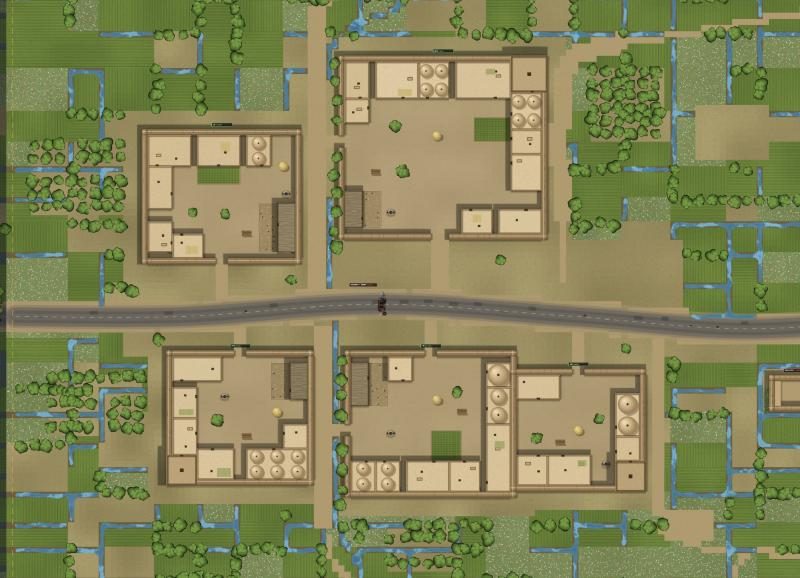
Loy Bagh is the farming hamlet. By tonight it's strung out along its irrigation ditch and the highway, fields and orchards between the qalats, with a little mosque by the road where the men pray and the shura is held.
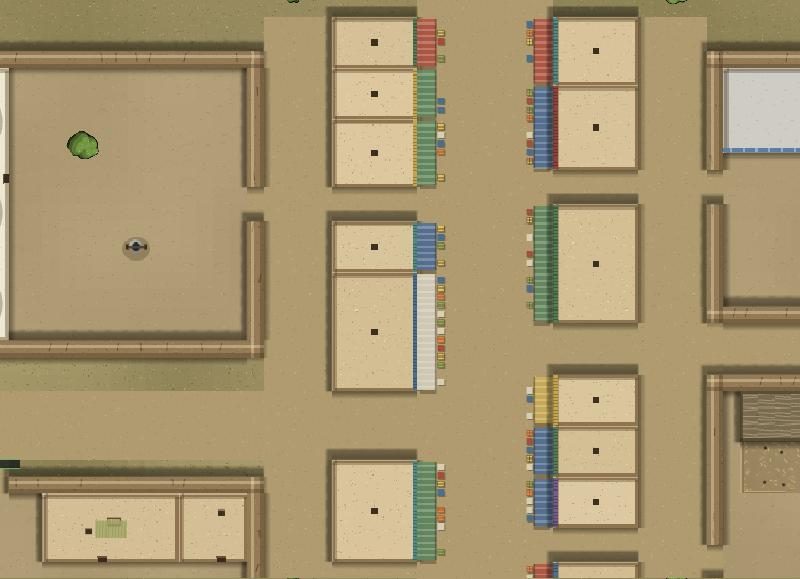
Shin Kalay is the bazaar: two terraces of one-room shops down the main road, each with a painted shutter and an awning out over its stall. There's a mosque with its whitewashed prayer hall on the west wall, so the rows of men in the yard face Mecca, and a school with concrete classrooms, a blue verandah and a water tank. Sra Deh, down by the river, is where the Taliban have their headquarters, by the ford.
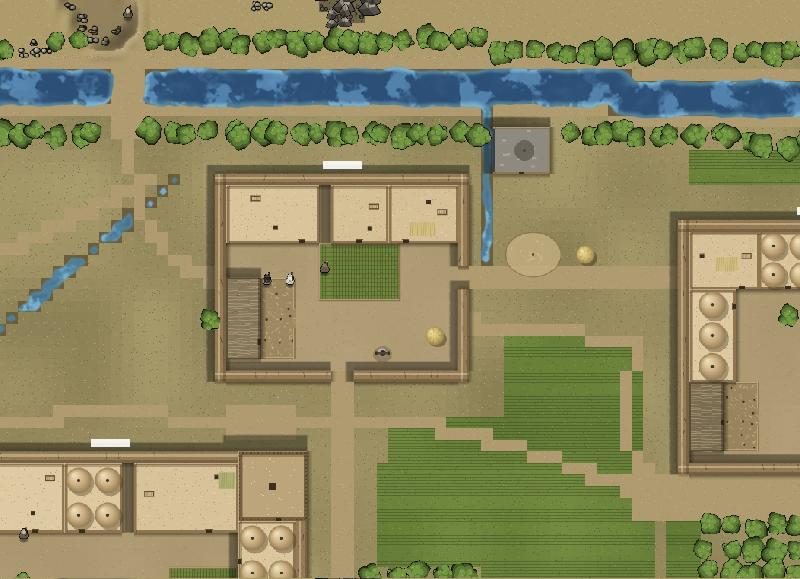
Out in the fields there are lone places too, each its own kind: a mill farm with a stone watermill on the canal bank, two field farms with their threshing floors, a desert farm with a tube well and a new poppy field cut into the sand, a ruined qalat in the wadi, and a Kuchi camp of black tents with a thorn fold for its flock.
Fields as they're farmed
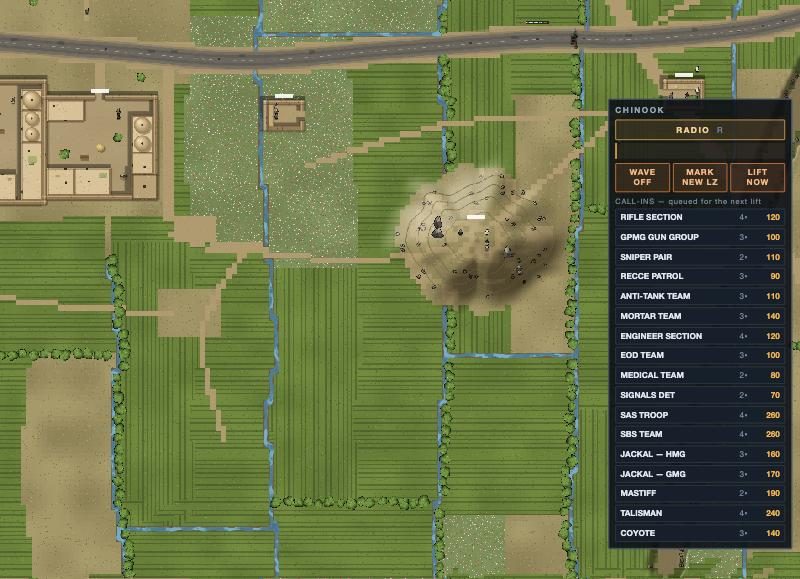
The fields were a checkerboard of little plots. The green zone isn't like that. Irrigation ditches, the joi, run off the canal towards the river every few dozen metres, most of them lined with poplars, and between them the plots are cut into long strips of maize, wheat, poppy or fallow.
That matters to the fighting. Wheat and poppy only hide a man lying down, so the fields are open ground you have to get across, while maize hides him standing. And a man can step over a narrow ditch instead of walking its length to a crossing: before that, a stretcher party had to carry a casualty all the way round one.
Then the fight didn't fit
With the compounds at their real size, the fighting broke. A rifle reached sixteen metres and a man engaged out to nineteen. A qalat's yard was wider than a rifle's reach.
So every distance in the fight went up about three times: how far a man sees, how far each weapon reaches, how far the Taliban listen, flank and fall back, the mortars, the flares. Rounds fly faster, and their spread was tightened to match, so a hit at the new ranges is about as likely as it was at the old ones.
The longer ranges showed up something else. Rounds aimed at a Taliban fighter were hitting the civilian standing next to him. So our men now hold their fire when there's a civilian beside the target or in the line of fire, and the further off he is, the wider the berth they give him.
The ground, a pixel at a time
Last thing tonight, the ground itself. It was flat tiles with dots on them. Now every patch of earth, sand, track, mud and crop is painted with colour that wanders at three scales with a fine grain over it, the edges between them warped off the tile lines and blended, fields that differ field to field with some coming ripe, and poppies that read pink and green. The pictures in this post were taken during the day, before that went in.

Who makes this: Section Command: Helmand Ops is made by one person, Jack Mustard, who is the whole of Tactical Chicken Studios.