
Home / Devlog / Section Command
Day one: a section in a borrowed engine
This afternoon I copied Charlie Foxtrot's engine into a new folder to see if it could carry a real-time tactics game about the British Army in Helmand. By midnight, a section could fight.
This afternoon I copied Charlie Foxtrot Company's engine into a new folder and gave it a new name: Section Command. The question was simple. Charlie Foxtrot is a fast, silly squad shooter. Could the same engine carry something slower and more serious: a real-time tactics game where you command British soldiers, not one squad but sections of them, and where the fighting is as close to the real thing as I can make it?
Why the British Army, and why Helmand
Because there are so few games about the British side of the war in Afghanistan, and almost none that are real-time strategy. My best mate Oli is ex-2 PARA and did two tours out there. Between him and a lot of memoirs, documentaries and manuals, I've got a fair idea of how it was done, and I want a game that does it that way.
The idea
Not the open desert, but the green zone: the irrigated strip along the Helmand River. Fields, treelines, ditches, mud-walled compounds, and one bare hill above it all. A Chinook puts you down. You take the hill, dig in on it, and hold it through the night against attacks out of the treelines and the compounds. Then you go out by day and take the valley back, a compound at a time.
A game of command
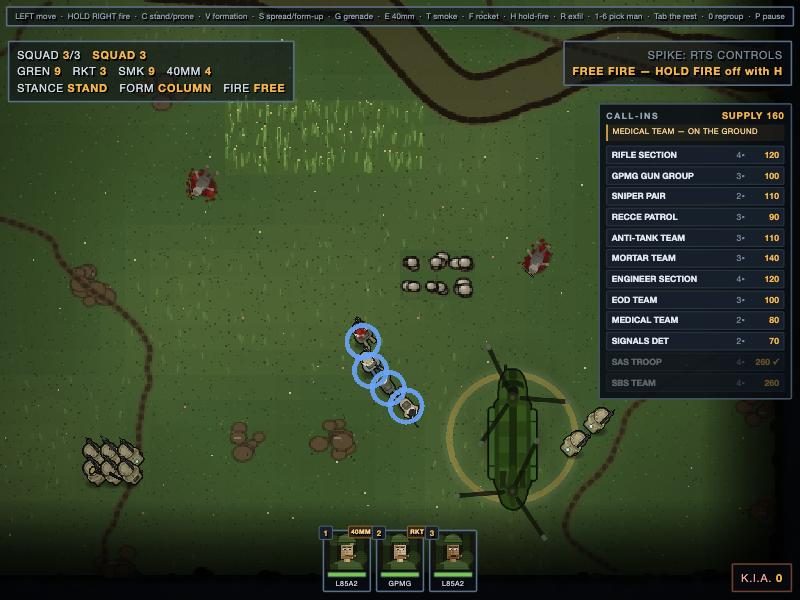
Charlie Foxtrot moves one squad wherever you click. Section Command needed the controls of a strategy game: drag a box to select, groups on the number keys, a camera you move yourself. That was the first job, and it went in quickly, because the engine underneath already knew how to move men, find paths and fire weapons.
Then the call-ins. Supply is the currency, and you spend it on what you need: another rifle section, a GPMG gun group, a sniper pair, a mortar team, engineers, a medic. The Chinook flies them in live, onto a landing zone you mark with orange smoke, and you can wave her off if it's hot.
Teaching a section to fight
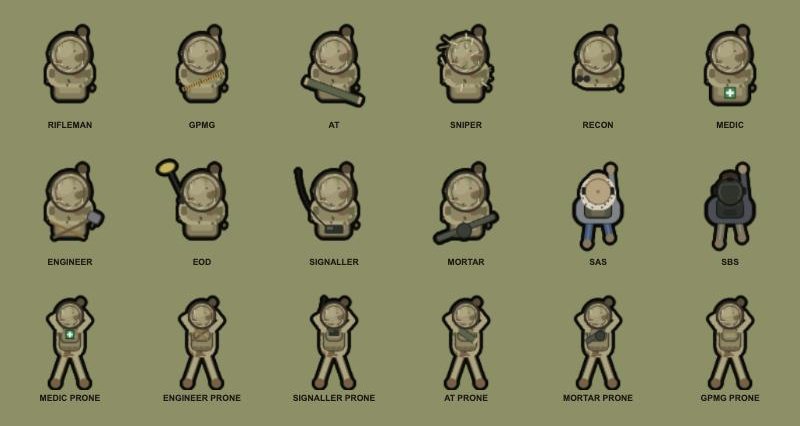
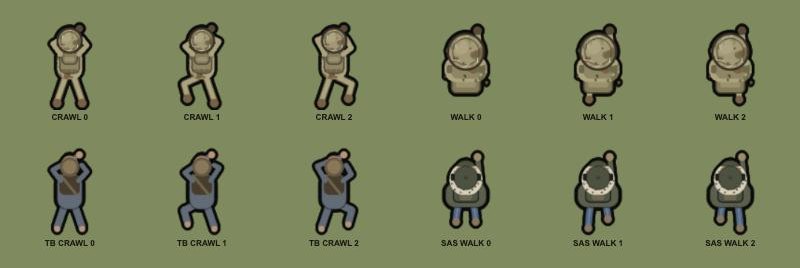
Most of the day went on the fighting, in layers. First the contact drill every British soldier learns: dash, down, crawl, observe, sights, fire. When a section first comes under fire, each man looks at the ground around him for the best cover he can reach, runs to it, gets down, and only then fires back.
Then the engagement itself: who can see whom, how far a round carries, how often it hits. Then fire and manoeuvre. SUPPRESS puts a section down where it can fire on a point and keeps rounds going into it, whether there's anyone visible there or not. BOUND splits a section in two: one half dashes a short leg forward while the other covers it, then they swap, leapfrogging all the way to the objective.
Then the Taliban, who fight as irregulars: from cover, shooting and moving, flanking only to cover, firing back at muzzle flashes, and pulling back when a man goes down rather than fighting to the last. Firefights last, the way they did: most rounds miss, and a moving man is hard to hit.
A whole day, start to finish
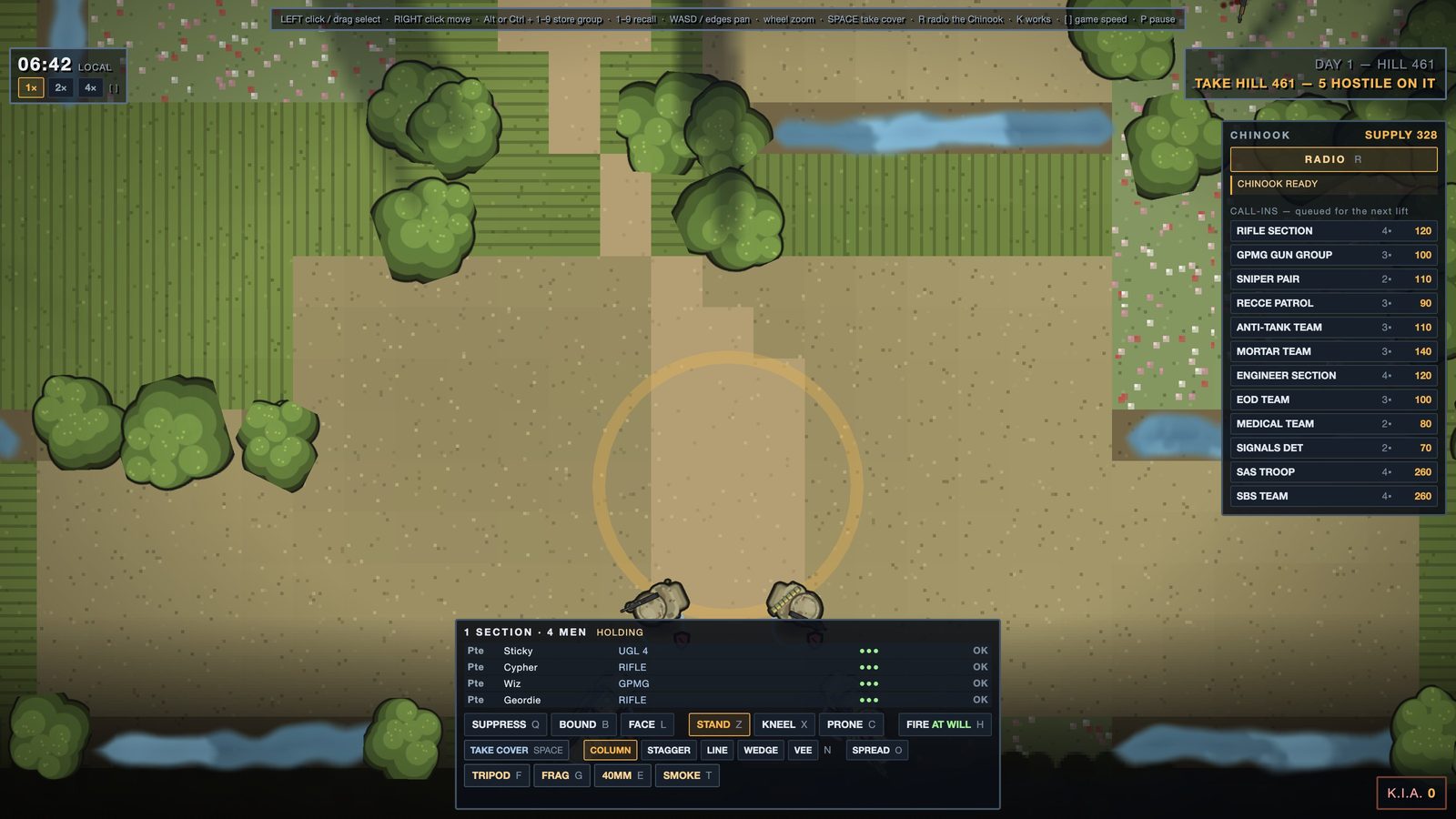
By the evening there was a campaign day. The Chinook brings you in at 06:30. You take Hill 461 from the Taliban on it, dig in with sandbags, sangars, HESCO and wire from the defence stores, and when the light goes at ten past seven they come for you out of the green zone, in waves, until first light. The game keeps real hours, and the colour of the light follows the sun.
It's rough. The men are drawn, the ground is flat, and nothing is balanced. But a section came under fire, went to ground and fought back, and that was the question I started with this afternoon. I think the answer's yes.

Who makes this: Section Command: Helmand Ops is made by one person, Jack Mustard, who is the whole of Tactical Chicken Studios.