
Home / Devlog / Section Command
The soldiers: drawn, then built in 3D, then 1.3 times life size
The men went from drawn sprites to 3D models, and then the question was size. At life size they were dots. Here's how they ended up at 1.3.
For the first week the soldiers were drawn in code: a helmet, a pack, a rifle and a pair of legs seen from directly above, and a roster of roles, each with kit you could pick out. On 8 October they became 3D models. Since then the question has been how big to draw them, and it took three goes.
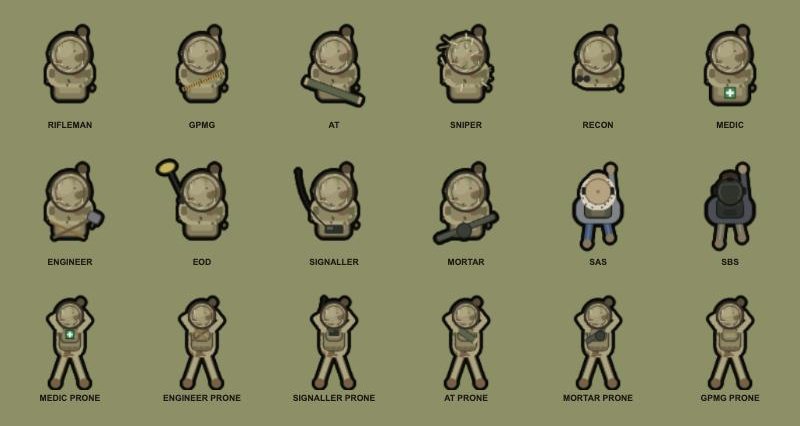
From drawn to 3D
Drawn men have a limit. Every pose has to be drawn again for every role, and none of them catches the light the way the rest of the world does. So I built the British infantryman as a 3D model, rigged and posed, in MTP, with the Mk7 helmet, Osprey body armour and its pouches, and the L85A2 with its sight. The game photographs him from above in every stance and every frame of every animation, and those pictures are what you see. He's still a 2D sprite on a 2D map. He's just drawn by a camera now instead of by hand.
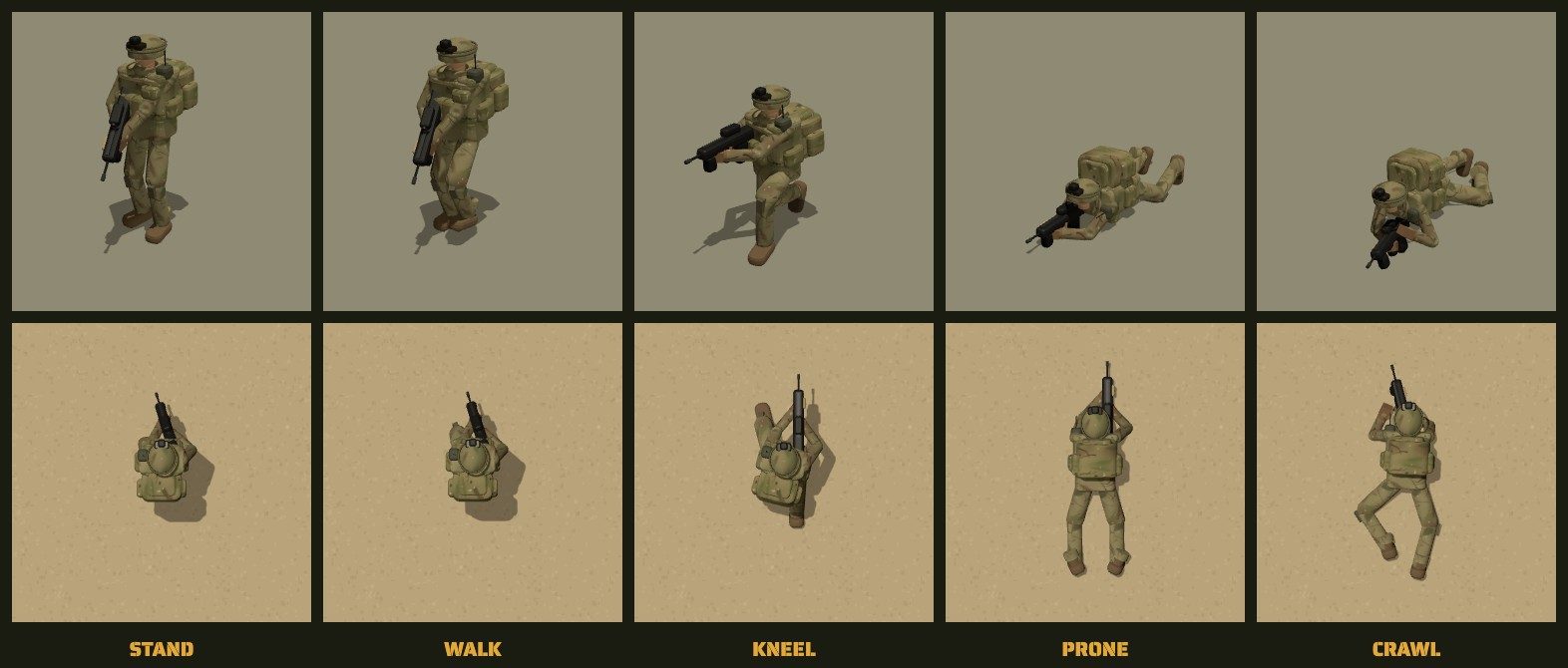
The Taliban followed the next day on the same skeleton, dressed as they were, then the Afghan Army and police, the people of the valley, and the special forces. Whatever a man's doing, he's doing it with his own kit in his hands: 29 actions for our soldier alone, from a reload in each stance to a tourniquet, the Vallon's sweep and a scoff.
Three sizes
The drawn men were about twice life size. That's normal in games seen from above: at true scale a man is a few pixels and you can't tell a GPMG gunner from a medic. When the 3D man went in, he went in at the drawn man's size, and he looked right.
8 October: drawn
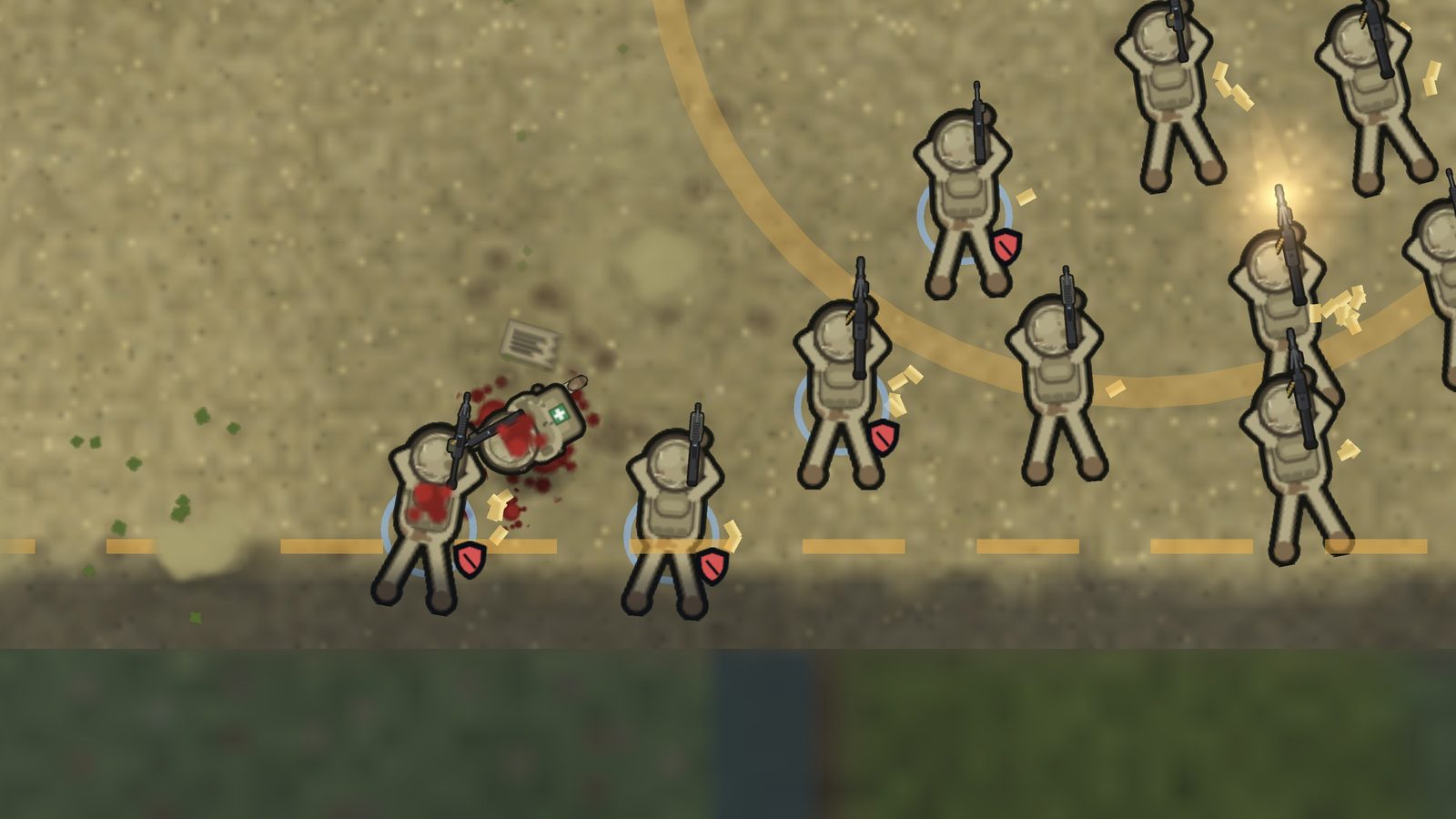
8 October: 3D
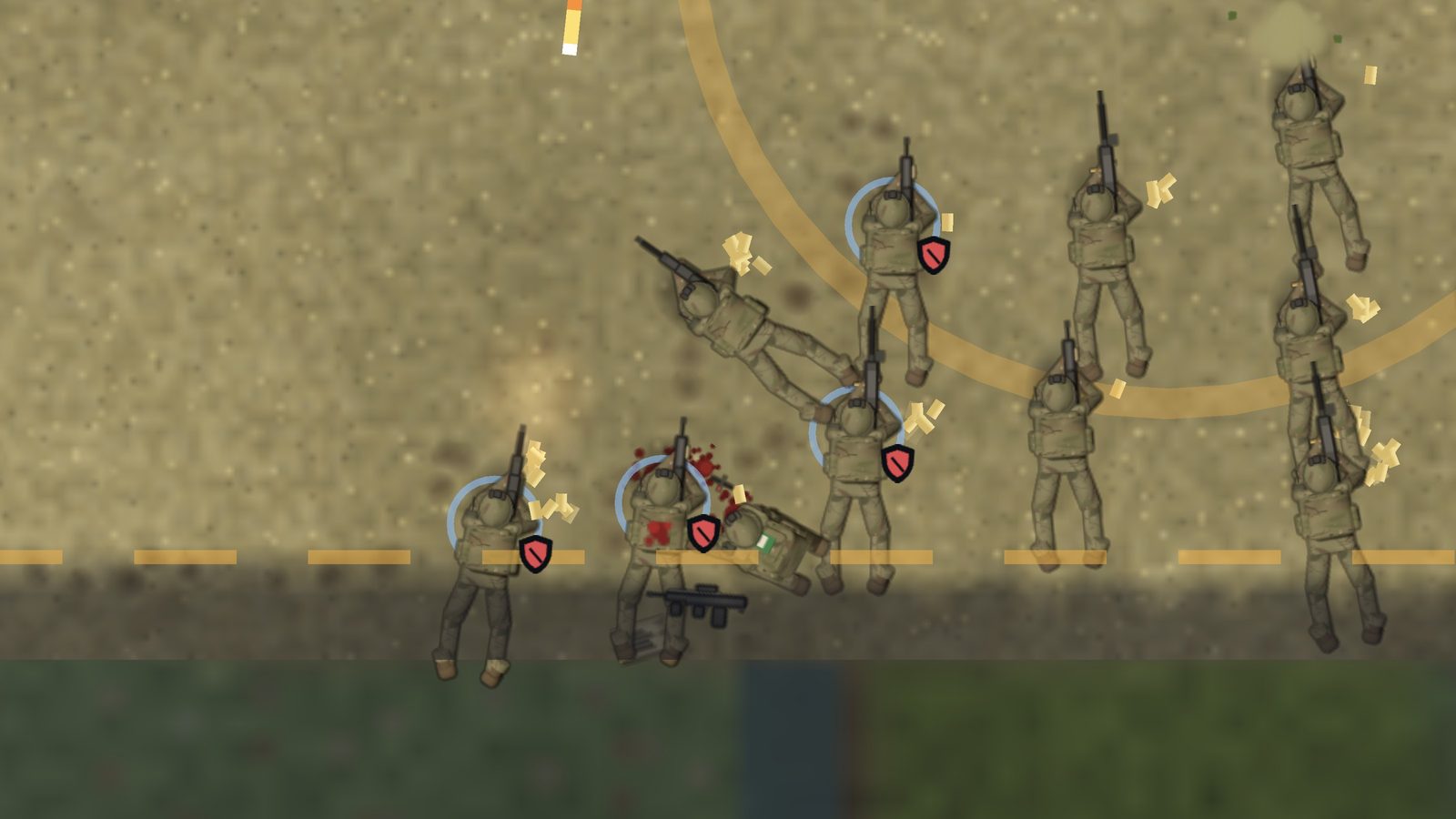
But the vehicles were built at their real sizes, and so were the qalats. A man twice life size next to a Jackal at its real size is a giant who can't fit in his own seat. On 10 October I tried the honest answer and put the men at life size too.
10 October: life size
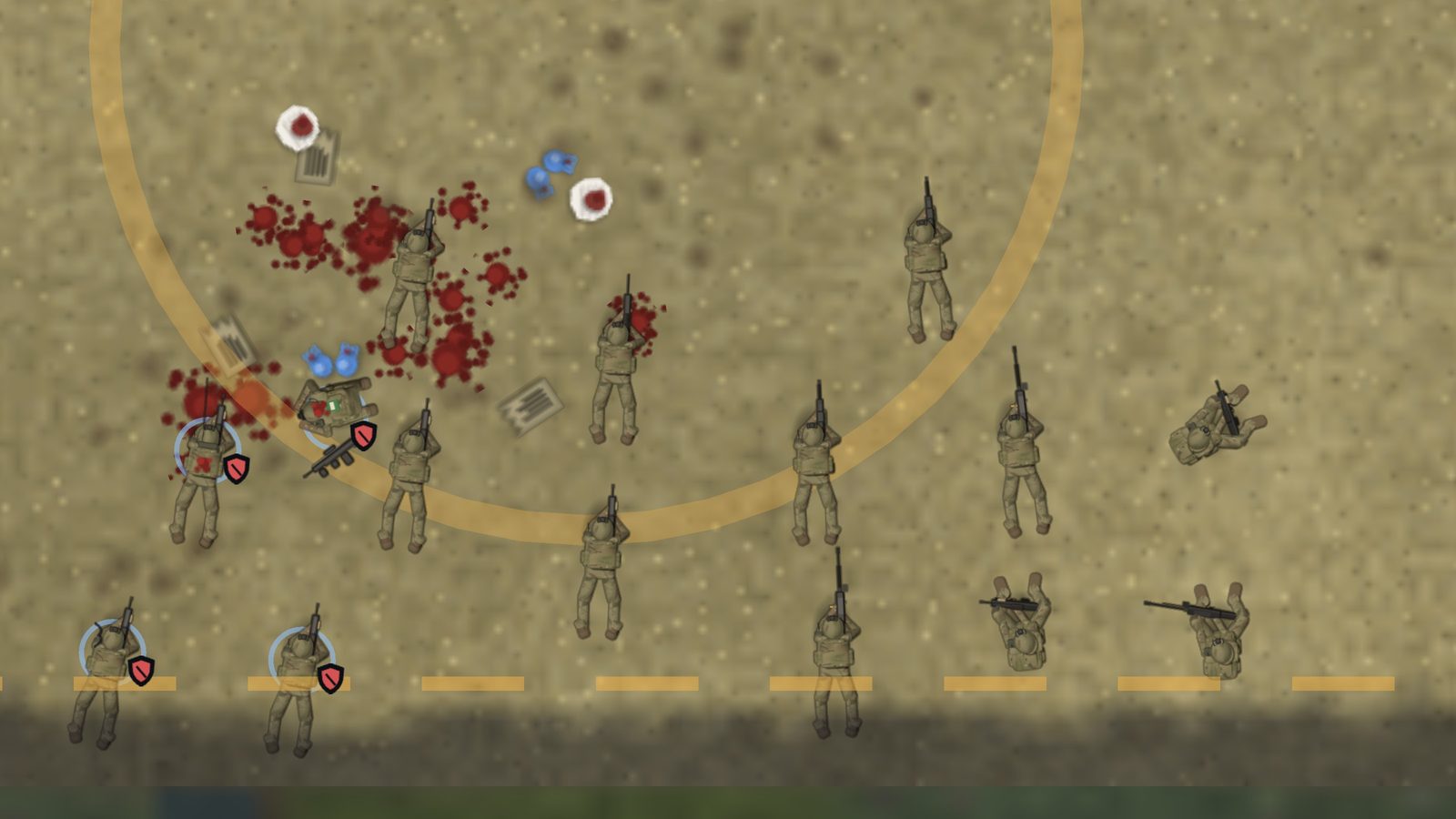
12 October: 1.3 times
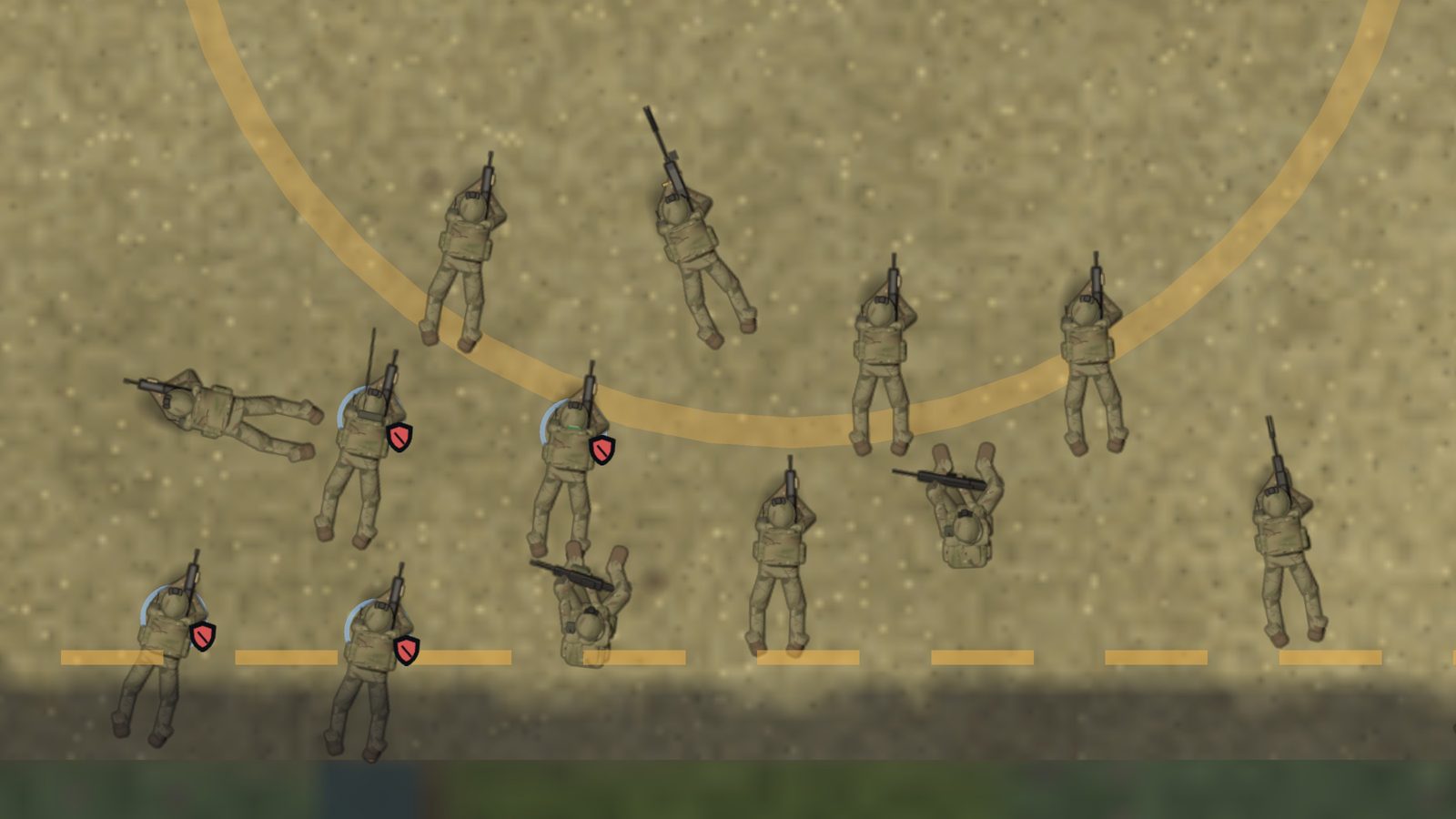
At life size they were dots. You could see where a section was, but not what a man was doing, kneeling or prone, rifle up or slung. On a screen the size of a valley, a soldier at real scale is just too small to read.
So the answer is in between. The men are drawn at 1.3 times life size, and everything they touch is scaled to match: their weapons, the animals, every vehicle, the Chinook and the aircraft, the roads and the highway, the doorways, the ladders and the families' things in their yards. What stays true is the layout of the ground: how far one compound is from the next, how far a rifle reaches across a field. It's all one switch in the code, so if playing it tells me 1.3 is wrong, it's a one-line change.

Who makes this: Section Command: Helmand Ops is made by one person, Jack Mustard, who is the whole of Tactical Chicken Studios.