
Home / Devlog / Section Command
2008 and 2012: two tours, two sets of kit
Zarghun is April 2008 and the valley is summer 2012, and the British soldier looked different in each. The camouflage, the helmets, the webbing and the rifles, side by side, as the game builds them.
Until today every British soldier in the game wore 2012's kit: MTP camouflage, the Mk7 helmet, the L85A2 with an ACOG sight on a rail. That was right for the valley. It wasn't right for Zarghun.
I've settled when the game is set. The first tour, Zarghun, is Herrick 8: April 2008, with 16 Air Assault Brigade. The valley and the heights after it are the company's later tour, the summer of 2012. Four years is a long time in a war. The British soldier who flew into Helmand in the spring of 2008 looked different from the one who was there in 2012, and he carried different things, so the game now dresses each man for his year.
The cloth
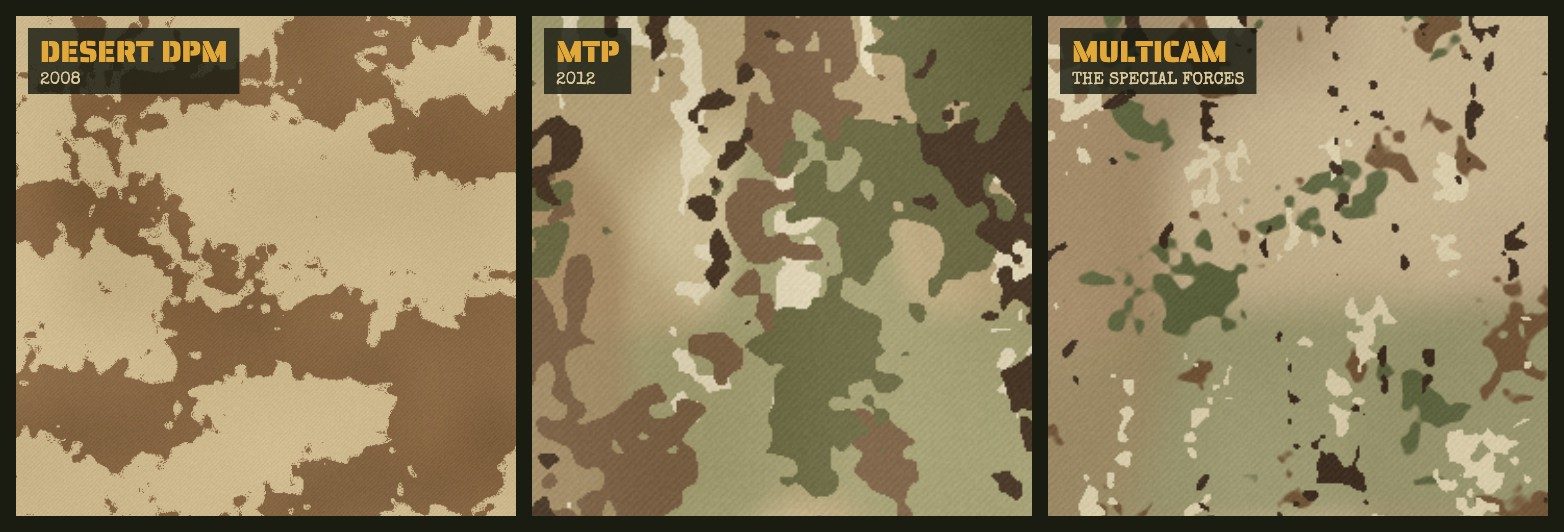
In 2008 it's desert DPM, the two-colour desert version of the British Army's Disruptive Pattern Material: a sand ground under dense, ragged splodges of mid brown, about two-fifths of the cloth, with flecks round their edges from the brush strokes the pattern was first painted with. By 2012 it's MTP, the Multi-Terrain Pattern: MultiCam's colours and its soft, blurred ground of tan, beige, pale green and tan-brown, with DPM's shapes laid over it, sharp, in dark brown, olive and brown, and MultiCam's thin cream streaks.
Both are drawn by the game rather than painted, and both come out at their real size on the man. A DPM splodge is four to ten centimetres across, two or three to a sleeve. MTP's shapes are bigger.
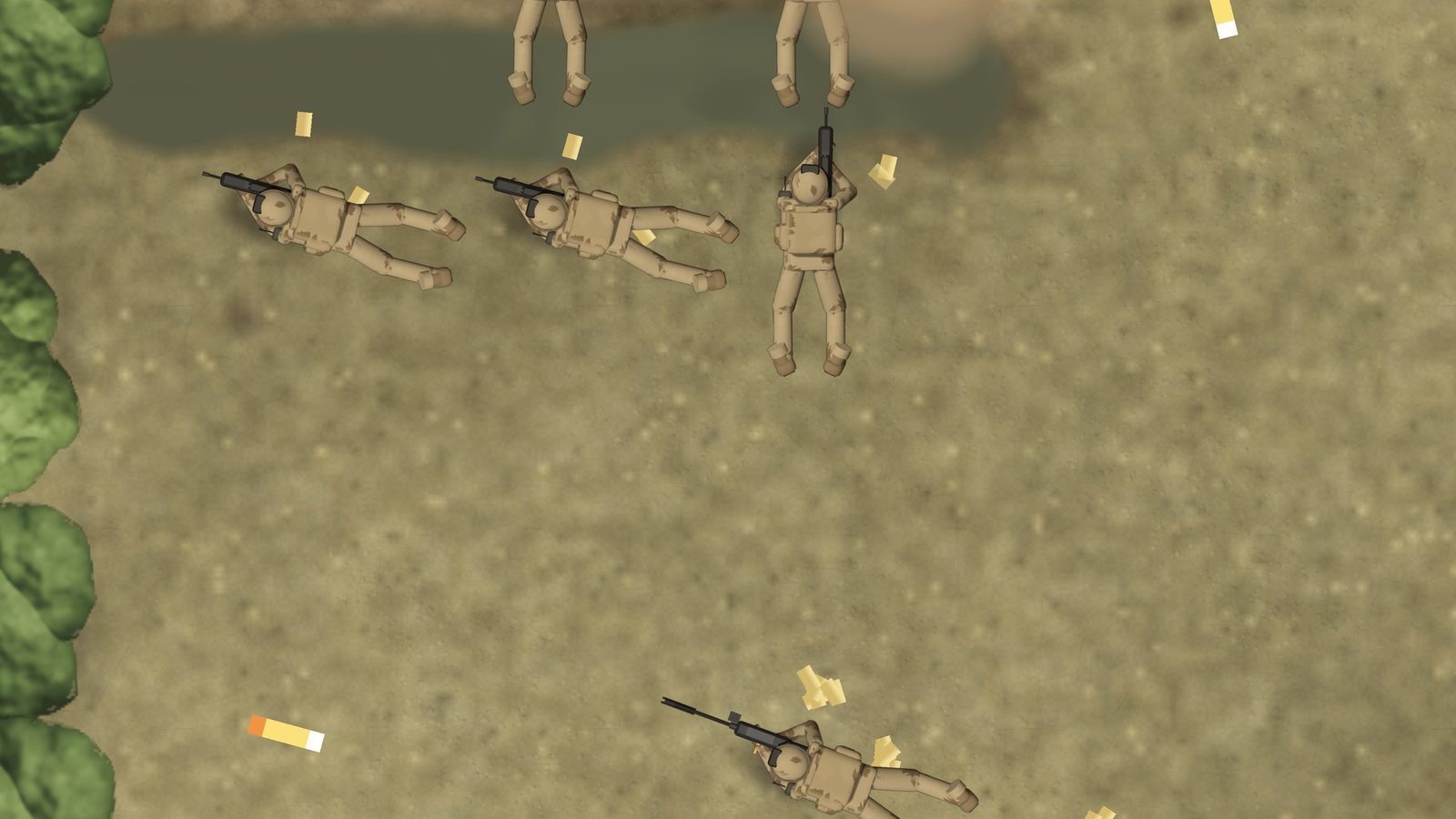
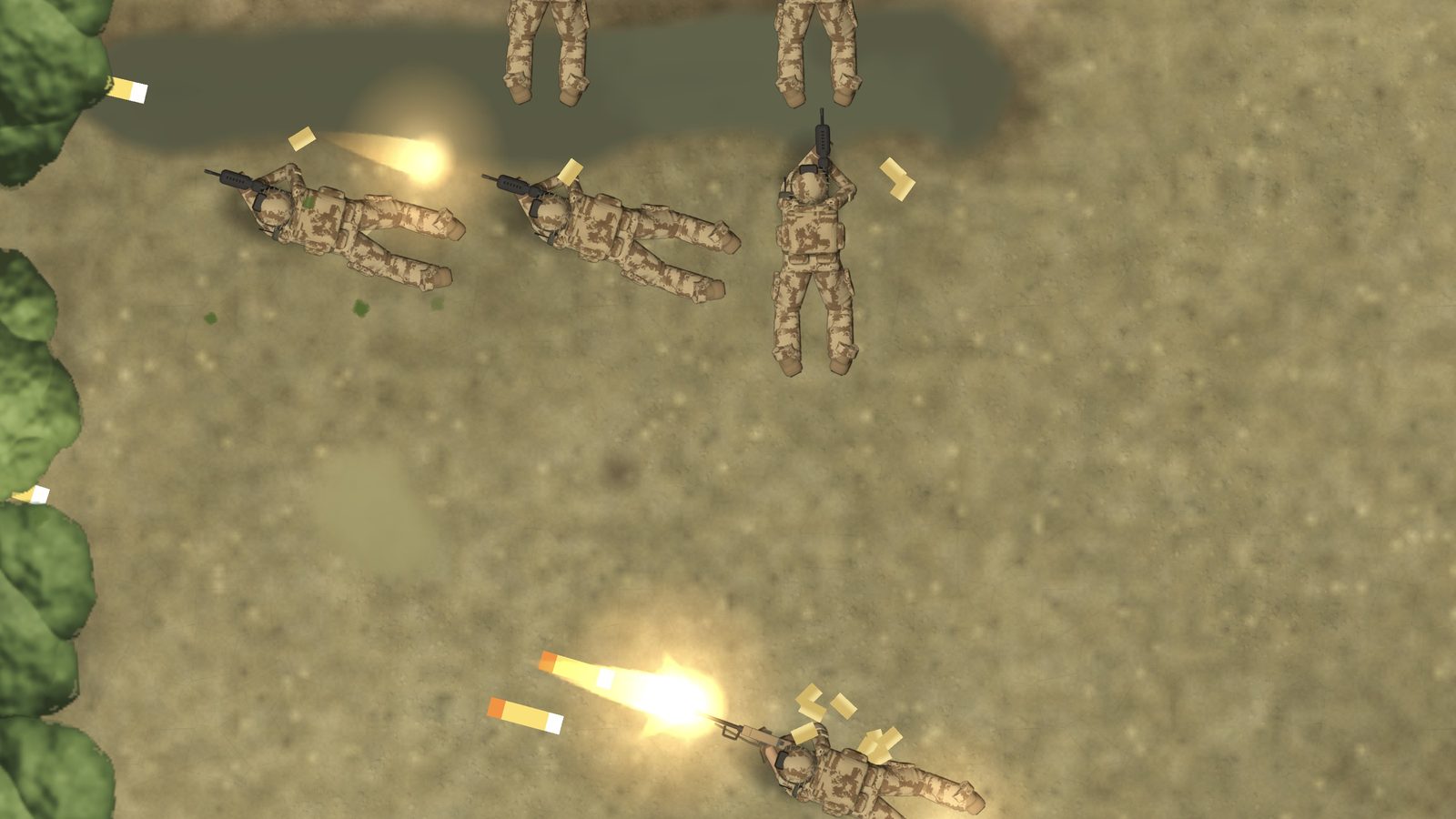
The DPM was the second go. The first came out as near enough plain sand with faint marks on it. I looked at it in the game and the answer was obvious: that isn't DPM. So I went back to how the real pattern is made, and drew it that way.
The first go
Redrawn
The kit
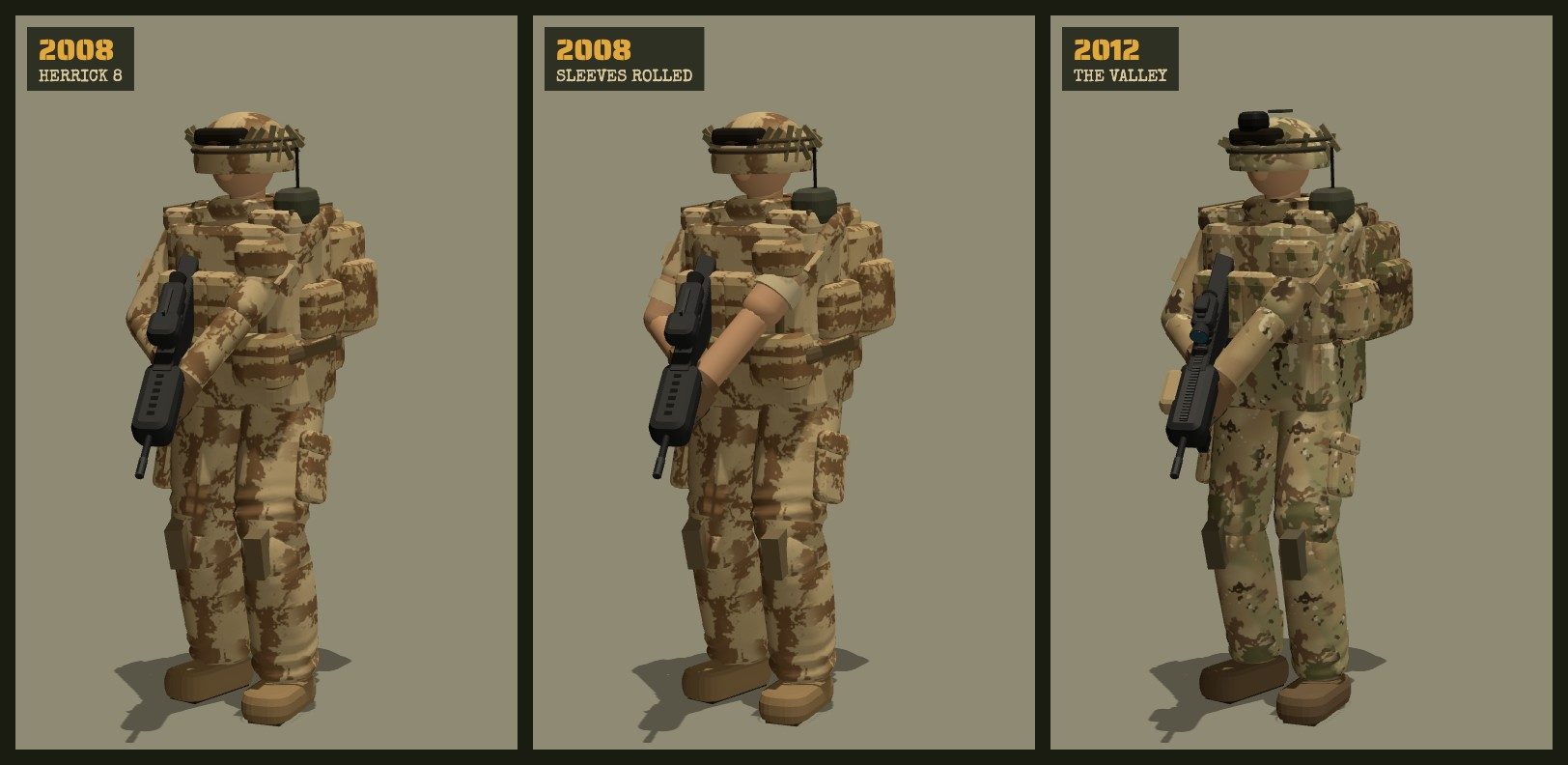
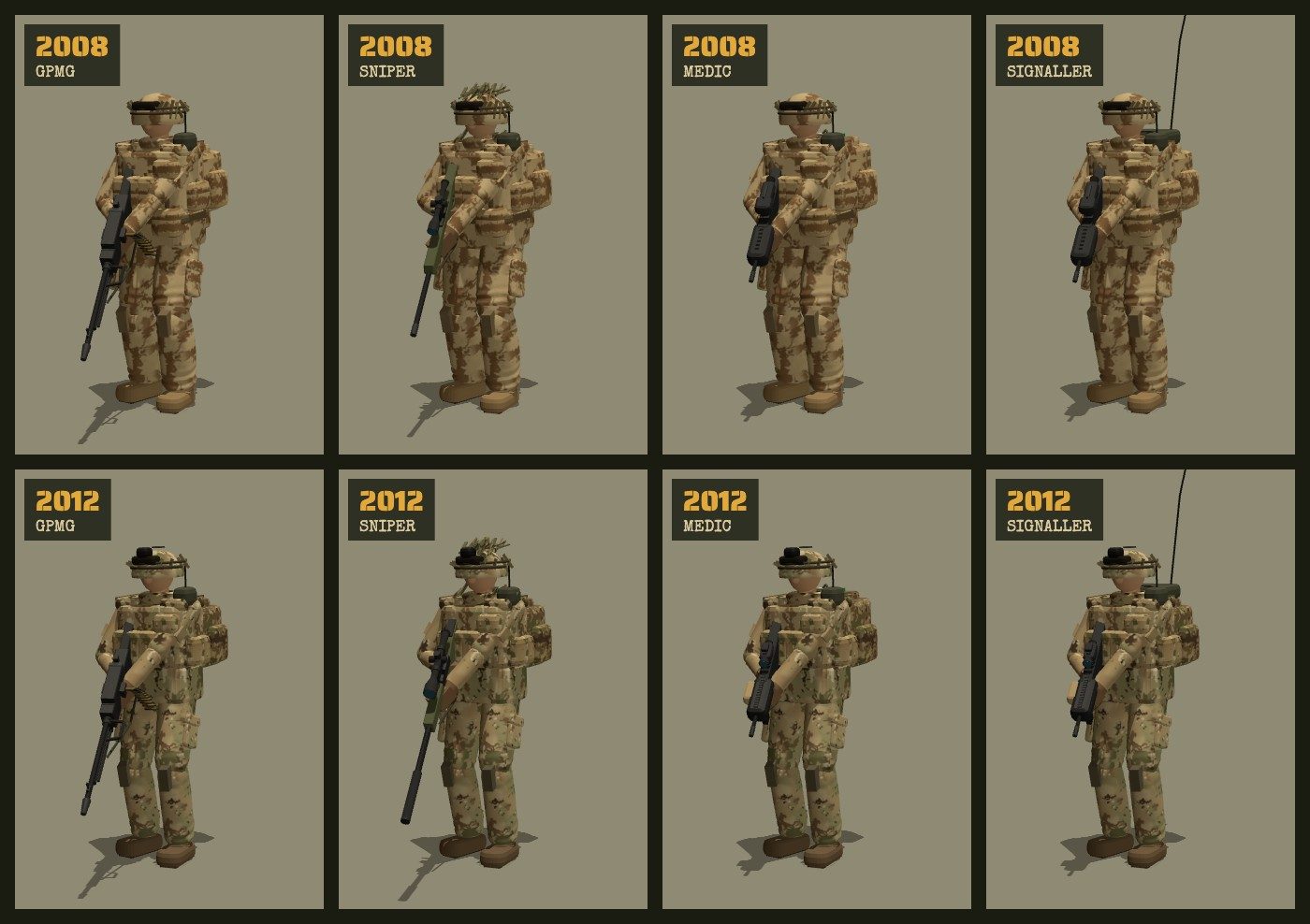
In 2008 the helmet is the Mk6, rounder and deeper, without a night-vision mount, with thick scrim on it. The body armour is the Osprey in its desert cover, and over it the old PLCE webbing: a belt with the ammunition pouches at the front of the hips and the water bottles behind, and its yoke over the shoulders. By 2012 the helmet is the Mk7, with thinner scrim and its IR patch, and the armour is the Osprey Mk4 with rows of MOLLE on it to take the pouches, and a hydration pouch on it when there's no daysack.
Some of it is just how men wore it. In 2008 nearly half of them have their sleeves rolled above the elbow. The trousers hang loose, 2008's desert combats loosest of all. And inside a base's walls, and only there, the kit comes off: helmet, armour, webbing and daysack, down to a shirt, the issue T-shirt (sand in 2008, brown in 2012) or nothing, with twelve seconds to get it all back on when they're stood to.
The rifles
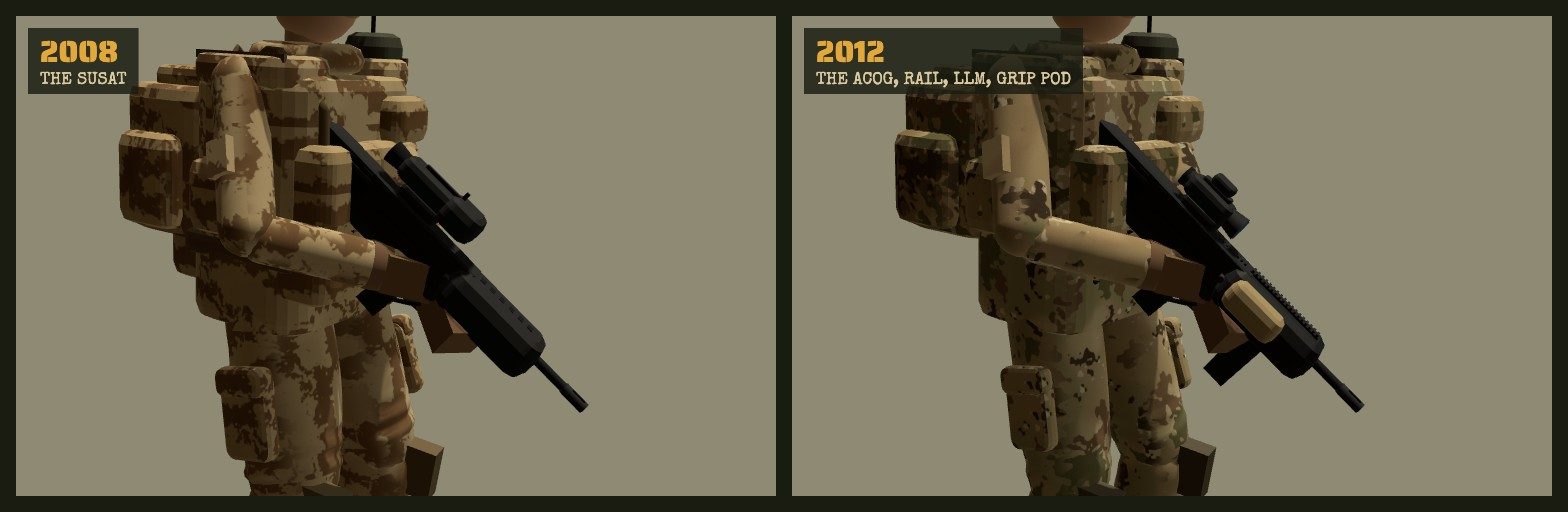
The rifle is the L85A2 both years, but it changed. In 2008 it has the SUSAT sight on a plain, vented handguard, with no rail and nothing hung off it. By 2012 it has the ACOG on a rail, a laser light module, and a grip pod underneath, and more of them have been sprayed tan, the grip, magazine and barrel worn back to black.
Other kit follows the year too. The sniper has the L96A1 in 2008, with its green thumbhole stock, and the L115A3 from 2009. The section's sharpshooter with his L129A1 doesn't exist yet in 2008, so that man carries an L85. The anti-tank weapon is the LAW 80, because the NLAW didn't arrive until 2009.
The year decides what you can call in, as well. In 2008 there are WMIK Land Rovers, Snatches, Mastiffs and the first Jackals, but no Coyote, no Talisman route-clearance team and no Supacat recovery vehicle: they all came in 2010.
From above
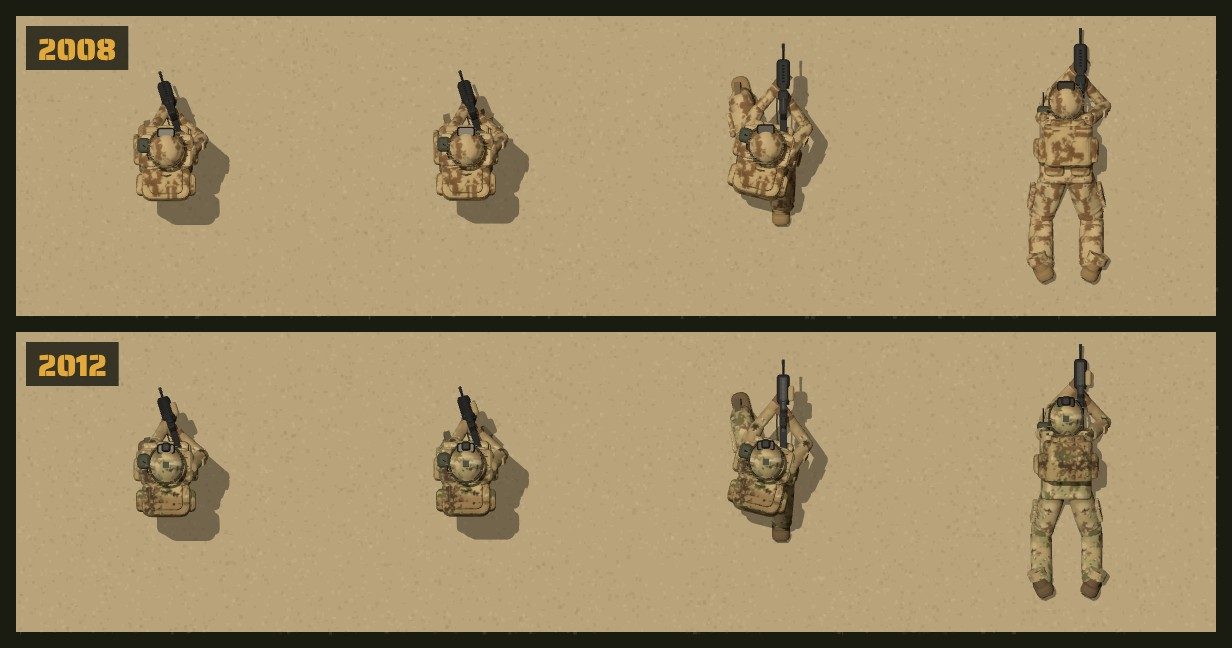
Zarghun, April 2008
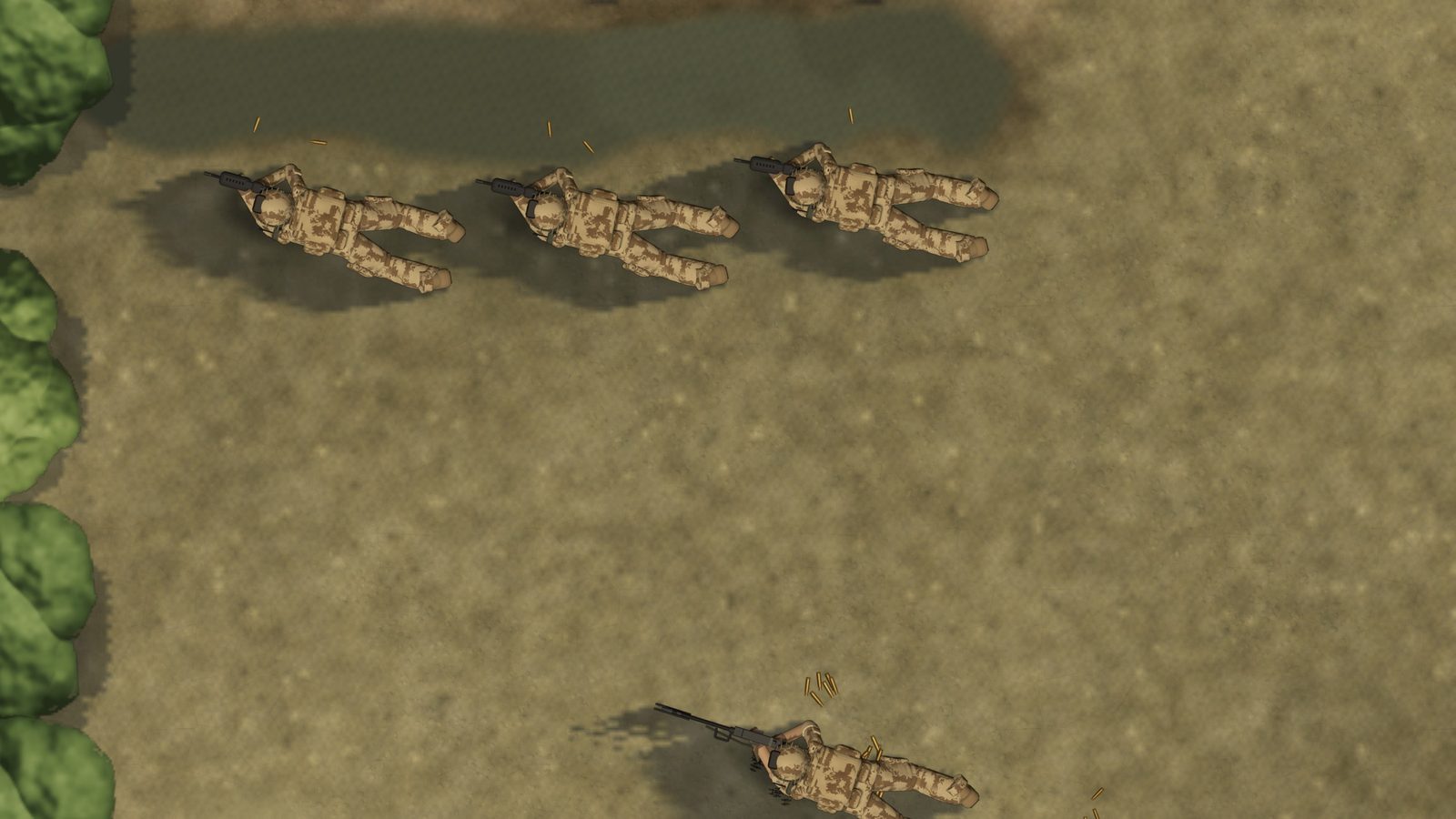
The valley, summer 2012
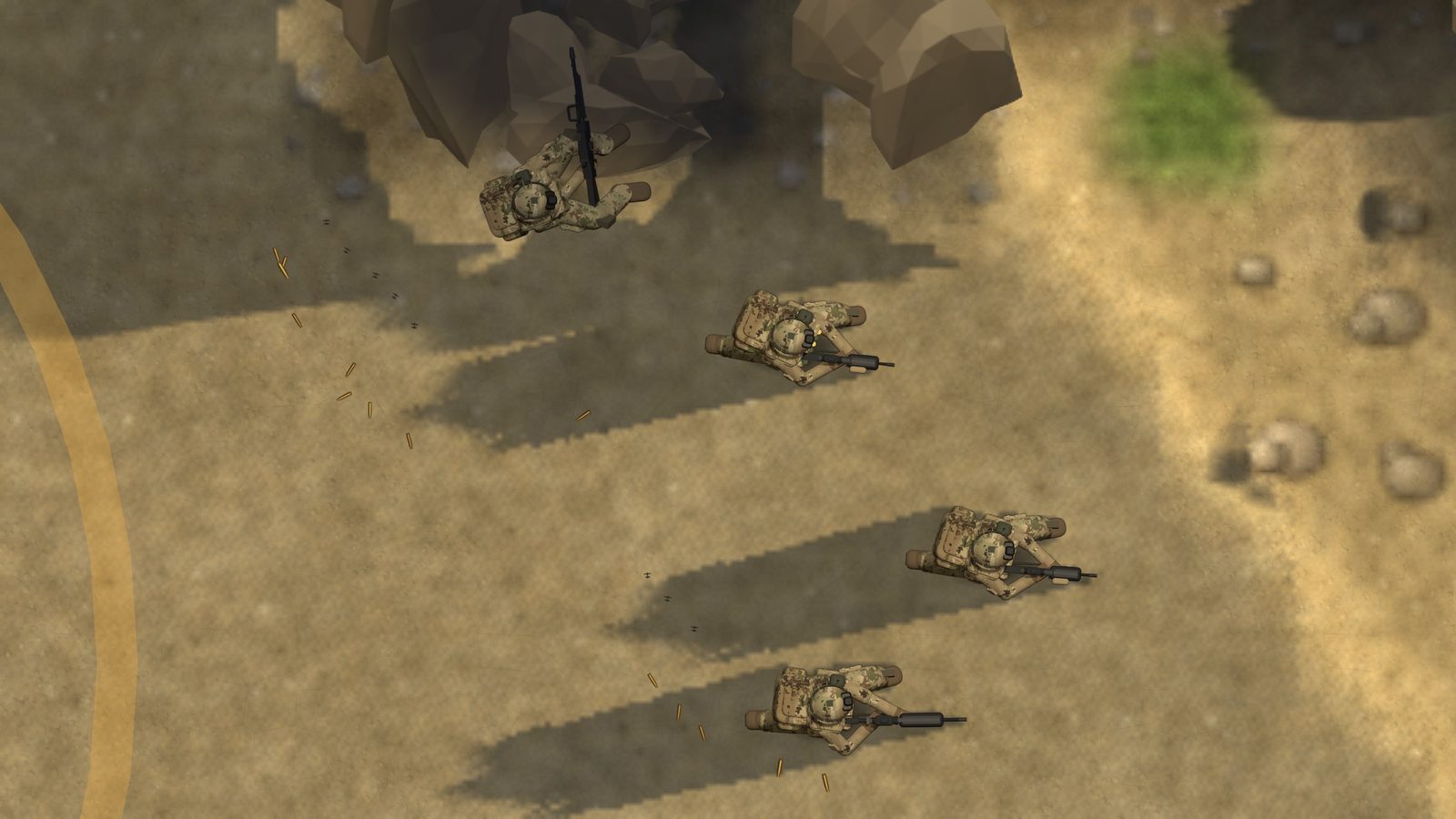
From above at the usual zoom you won't count the pouches. But you can tell the two years apart at a glance, sand and brown against the greener MTP, and you can tell a GPMG gunner from a sniper. That's what all the detail is for: a game you look down on still has to be right when you look closely.
If you served in either year and something here isn't how it was, I'd like to hear about it: hello@tacticalchicken.games.

Who makes this: Section Command: Helmand Ops is made by one person, Jack Mustard, who is the whole of Tactical Chicken Studios.